
John the Worst

Bad King John, known as Softsword and Lackland, is a supporting character in my new novel, OUTLAW KNIGHT (I): CRUSADE. Let’s take a look at old Johnny, generally reckoned one of the worst kings to ever disgrace the throne of England.
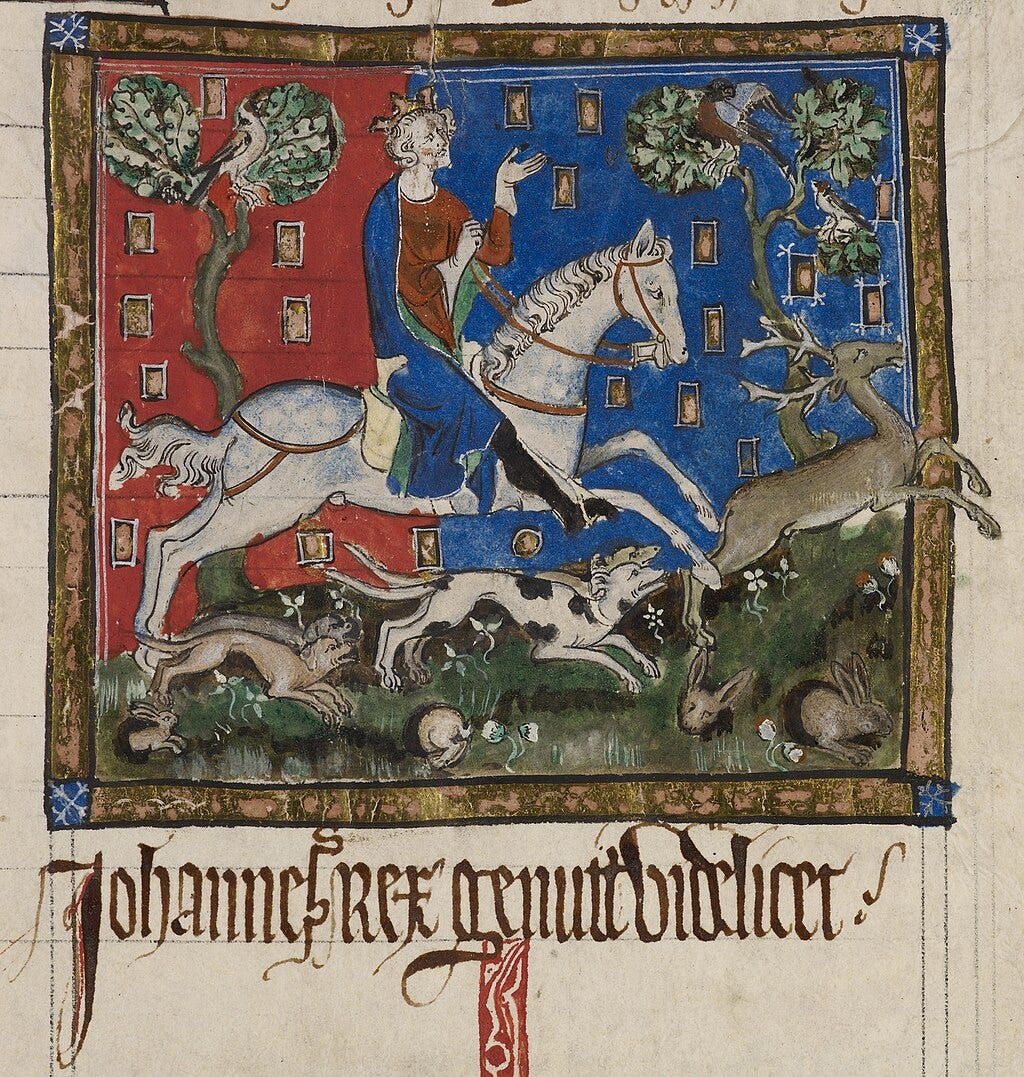
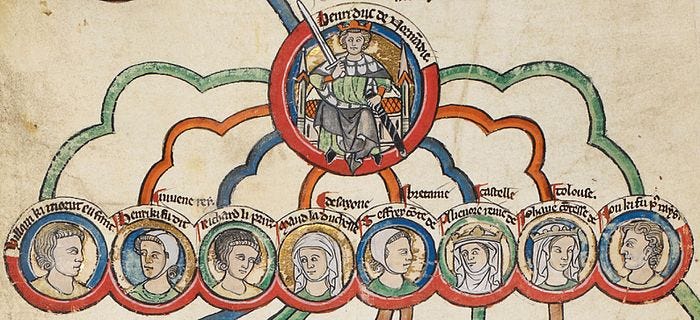
John was the youngest son of Henry II and Eleanor of Aquitaine, and a problem child from the start. As the youngest, he was not expected to inherit significant lands - hence one of his popular nicknames, ‘Lackland’. All that changed thanks to the Great Revolt of 1174, in which John’s mother and elder brothers turned against Henry. After crushing the revolt, Henry chose to favour his youngest son, and made him Lord of Ireland, as well as granting him lands in England and France.
Alas, John did not distinguish himself. In 1185 he went to visit Ireland, where he managed to provoke the Irish lords by mocking their unfashionable long beards. He also failed to make allies among the Anglo-Irish barons, did badly in war against the Irish, and eventually sloped off back to England, pinning all the blame on his viceroy, Hugh de Lacy.
Not a great start, then, and it got worse. When John’s brother Richard joined forces with Philip Augustus in 1189, John jumped into bed with the winning side, abandoning the father who had done so much for him. The news of his defection proved fatal to Henry, already suffering from an anal fistula (ouch). Famously, the old man turned his face to the wall, groaning “shame, shame upon a conquered king…”
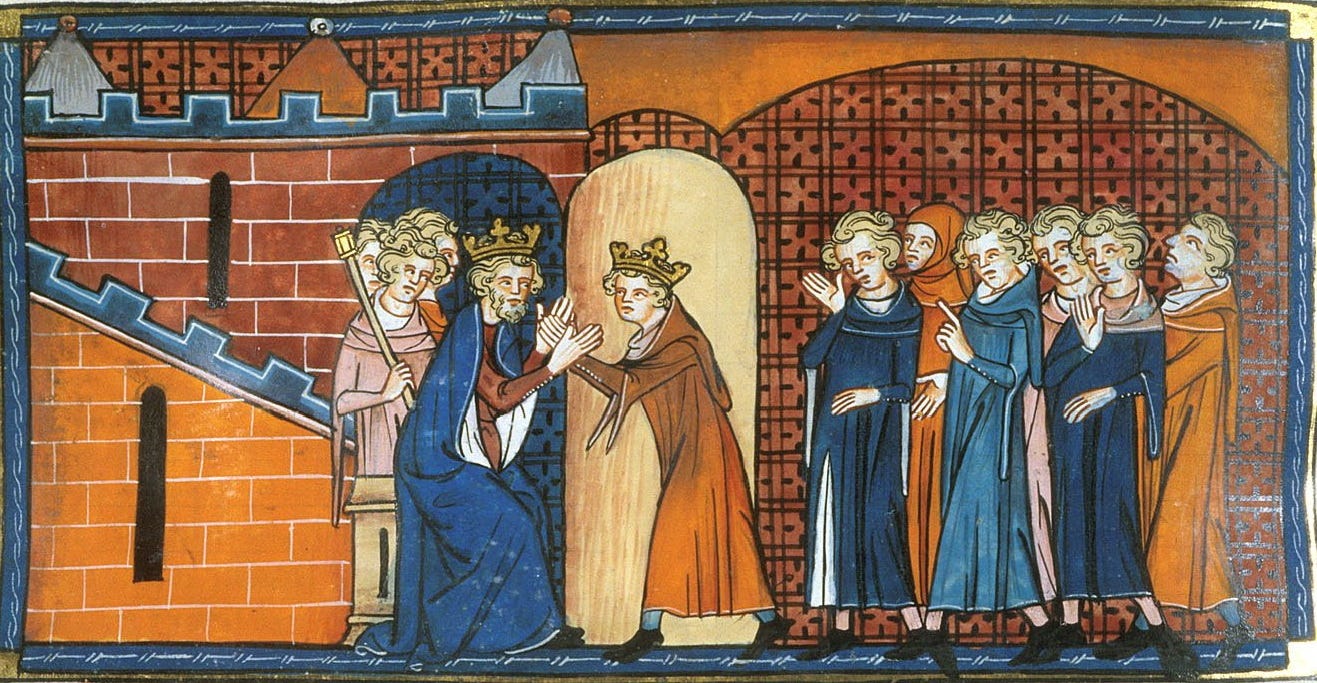
When Richard became king and went off on the Third Crusade, John proceeded to betray him as well. With Philip’s connivance, he planned to usurp the throne of England and the vast Angevin estates on the continent. Their plot failed when Richard was released from prison in Austria, and came racing back to crush John’s supporters in England. Soon afterwards John offered his surrender, and was forgiven - humiliatingly - on the grounds that he was a child, led astray by evil counsellors.
This was not the greatest CV, though it could be argued that John was no less treacherous and ambitious than the rest of his family - after all, they weren’t called the Devil’s Brood for nothing. The question was, what sort of king would he make, if and when the crown fell into his hot little hands?
The world got to find out in 1199, when Richard got himself killed during the siege of a minor castle. He left no legitimate children and two potential heirs: his surviving brother, John, and Arthur of Brittany, son of their late brother Geoffrey.
Inevitably, war followed. John got off to a splendid start, capturing Arthur and many of his allies in a lightning raid on Mirabeau in Normandy. He had acted with a speed and decisiveness worthy of his father, or even the Lionheart, and (briefly) looked as if he might confound expectations.
Briefly. John squandered his victory with an act of the most astonishing stupidity i.e. the murder of Arthur. Even worse, he might well have done the deed with his own hands in a fit of drunken rage. The political consequences were disastrous, as the nobles of Anjou and Poitou abandoned John in disgust and went off to join Philip instead. The wily French king, determined to dismantle the ‘Angevin Empire’, must have thought it was Christmas.
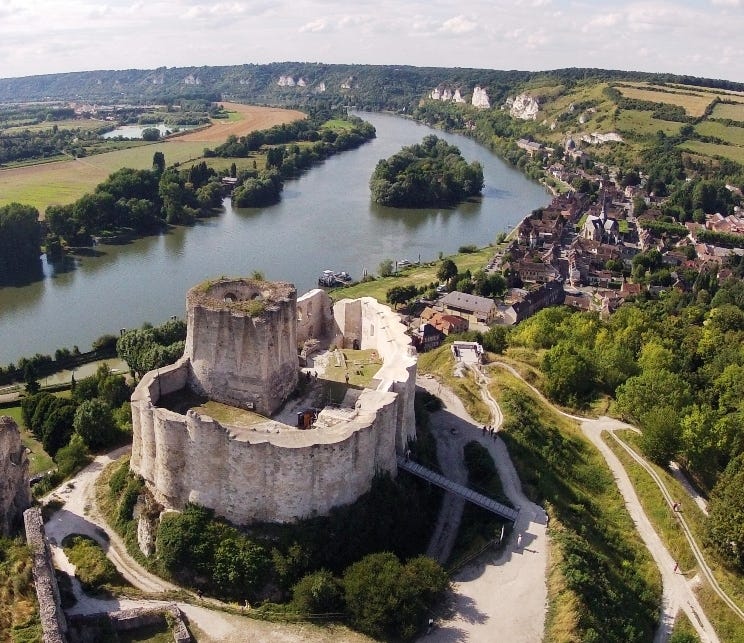
From this point on, John’s luck deserted him. Philip invaded Normandy and laid siege to the key castle of Chateau Gaillard, which Richard had boasted he would hold, ‘even if the walls were made of butter’. John came up with an inventive two-pronged strategy to lift the siege, which failed dismally when William Marshal - of all people - failed to bring up support in time. Adding to John’s woes, his lands in the south, Poitou and Aquitaine, were subjected to multiple invasions; from the direction of Navarre as well as France. Everyone, it seems, was smelling blood in the water.
John also faced serious opposition at home. This was provoked by his relentless taxation for the war on the continent, as well as his habit of riding roughshod over law and custom. In fairness, he had to deal with a particularly unruly baronage, who cared little for royal authority. When he threatened to hang the son-in-law of an important born, Robert Fitzwalter, for murder, FitzWalter shouted at the king:
“You will not hang my son-in-law! By God's body you will not! You will see two hundred laced helms in your land before you hang him!"
These barons, it should be noted, were really no better than John: even Philip Augustus compared FitzWalter and his ilk to disposable torches, fit to be thrown into a latrine once their usefulness was expended.
For all his flaws, John did not lack for energy and ability, especially when driven into a corner. After 1204 he staged a comeback, leading successful campaigns in North Wales and Ireland, while stitching together a grand alliance of princes on the continent to recover his lost lands. Nobody who witnessed the king’s actions in these years, forcing the submission of Llywelyn Fawr (the Great), or cowing the Anglo-Irish barons of Ireland into submission, would have called him ‘Softsword’.
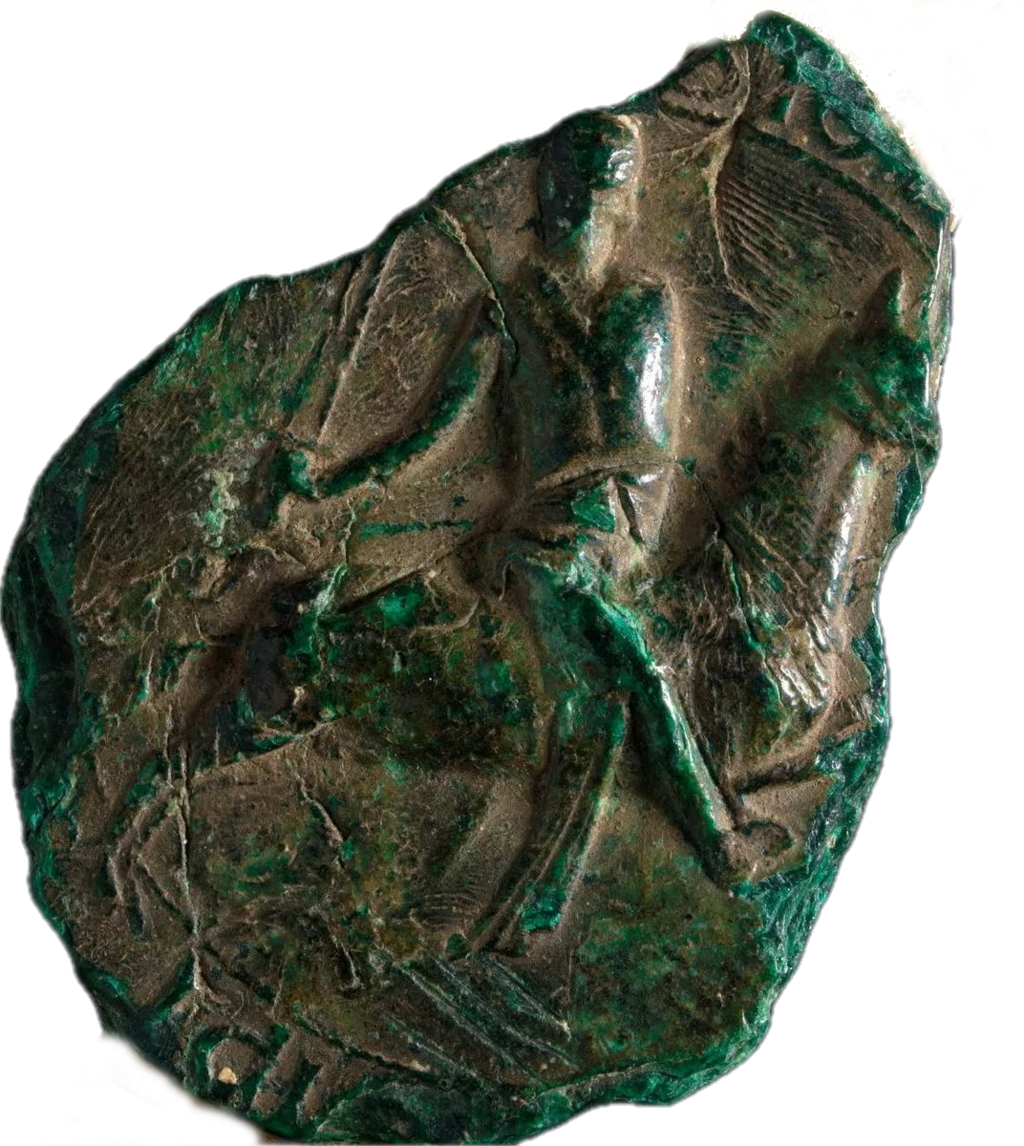
Everything hinged on his Grand Alliance, so painstakingly and expensively put together. If it had proved a success, John might yet have covered himself in glory. As it was, the alliance crashed to defeat at the pivotal battle of Bouvines, fought on 27 July 1214. John was not present at the battle, but it was the death-blow to his cause on the continent. All he could do was scramble back to England, with nothing to show his enraged barons for all the vast expense and outlay.
There followed a meeting at Runnymede. The baronial rebels, now calling themselves the ‘Army of God’ (cough) forced John to put his seal to the famous Great Charter. While this document eventually came to enshrine English liberties, at the time it was really a means of restraining the king, and safeguarding the interests of the elite. John had no intention whatsoever of honouring the charter, which he regarded as illegal, and threw it aside as soon as he could. For good measure he also appealed to the Pope, who obligingly excommunicated the Army of God.
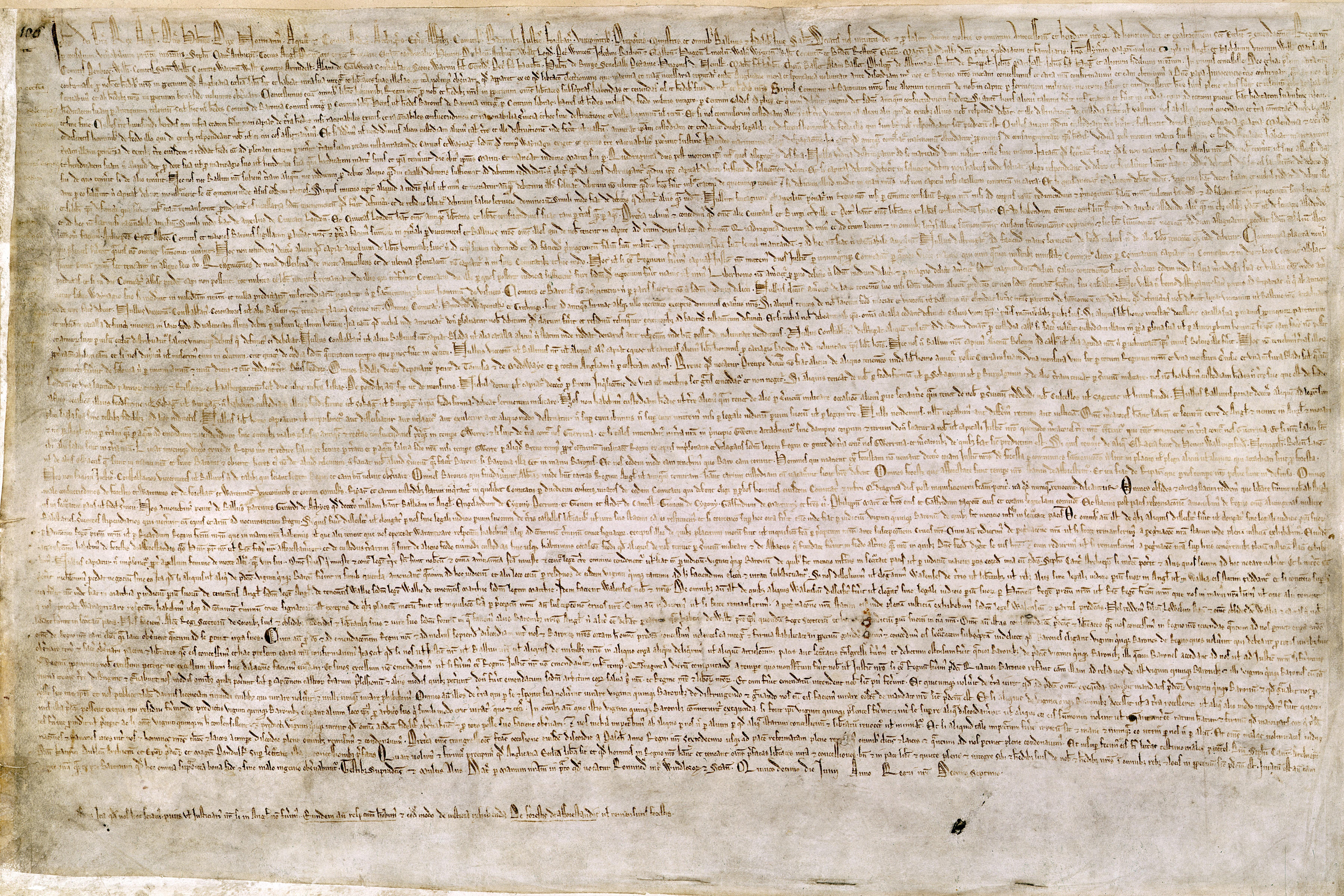
Civil war followed. John was now fighting a rearguard action inside his own kingdom, deserted by many of his barons, heavily reliant on an army of foreign mercenaries. Yet he was far from done. In a lightning autumn campaign, he split the baronial forces and pinned them down in London. Desperate, they invited Philip’s son Prince Louis to come over and replace John as king. Louis was actually crowned and anointed, so he should probably be included among the official list of kings of England.
Fighting raged on for another year. John continued to outfox his opponents, driving back the King of Scots and lifting the rebel sieges of Windsor and Lincoln. He benefited from the support of a brilliant guerrilla fighter, William of Cassingham - nicknamed ‘Willikin of the Weald’ - who cut up Louis’s French troops in the forests of the Weald and Kent, and burnt their siege engines at Dover.
However, John’s race was almost run. In September 1216, aged forty-nine, he contracted dysentery at King’s Lynn in Norfolk. There were rumours of poison, though he might simply have overstrained himself: dysentery was a big killer, especially in military camps. He struggled back west, losing his crown jewels in the Wash along the way - a serious loss, for a king who relied on foreign mercenaries. At Newark, on 18/19 October, he expired in great agony of body and mind.
Thus, to quote Charles Dickens, “was an end of this miserable brute.” Dickens is far from alone in utterly condemning John, perceived by many as the worst king England ever had to endure.
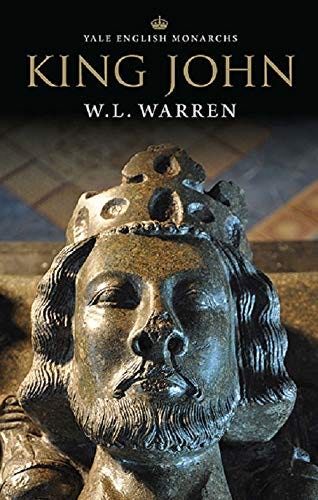
That’s some claim, when you consider the competition. Was John really such an irredeemable disaster? Personally I am still inclined to agree with WL Warren, writing in the 1960s, who described John thus:
“He had the mental abilities of a great king, but the inclinations of a petty tyrant.”
If that has whetted your appetite, please see the links below to pre-order my novel on Amazon.
I had the same impression for him, but last year I read The Evolution of the Medieval World by David Nicholas and the author descibes him as a "great reformer" and also says that history was unfair to him, mostly because of how he's depicted in the adventures of Robin Hood, so now I'm kind of torn.
"When Richard became king and went off on the Third Crusade, John proceeded to betray him as well. With Philip’s connivance, he planned to usurp the throne of England and the vast Angevin estates on the continent. Their plot failed when Richard was released from prison in Austria, and came racing back to crush John’s supporters in England. Soon afterwards John offered his surrender, and was forgiven - humiliatingly - on the grounds that he was a child, led astray by evil counsellors."
Much of this is depicted in virtually every Robin Hood movie.
It says a lot that Britain has never had another King named John since his death.