A Wake! A Wake!

I have posted a lot on Robin Hood, but I am interested in any and all medieval outlaw legends. Attached is an interesting piece of evidence relating to Hereward the Wake, the famous outlaw who defied the Normans in the Isle of Ely.
After his initial flight from England, in about 1063, Hereward is said to have gone to Cornwall and Ireland, before being shipwrecked off the coast of Flanders. He was received by the count of that land, Manasses the Old, and served in a Flemish expedition against the people of ‘Scaldemariland’.
The expedition to Scaldemariland certainly took place. Count ‘Manasses’ was in fact Count Baldwin V of Flanders, and it was his son Robert the Frisian who led an army of French and German-speaking troops across the ‘Scaldemermur’; probably somewhere in the Scheldt estuary. A fight between his army and local forces ended in a defeat for the invaders, who were driven back with much loss of life.
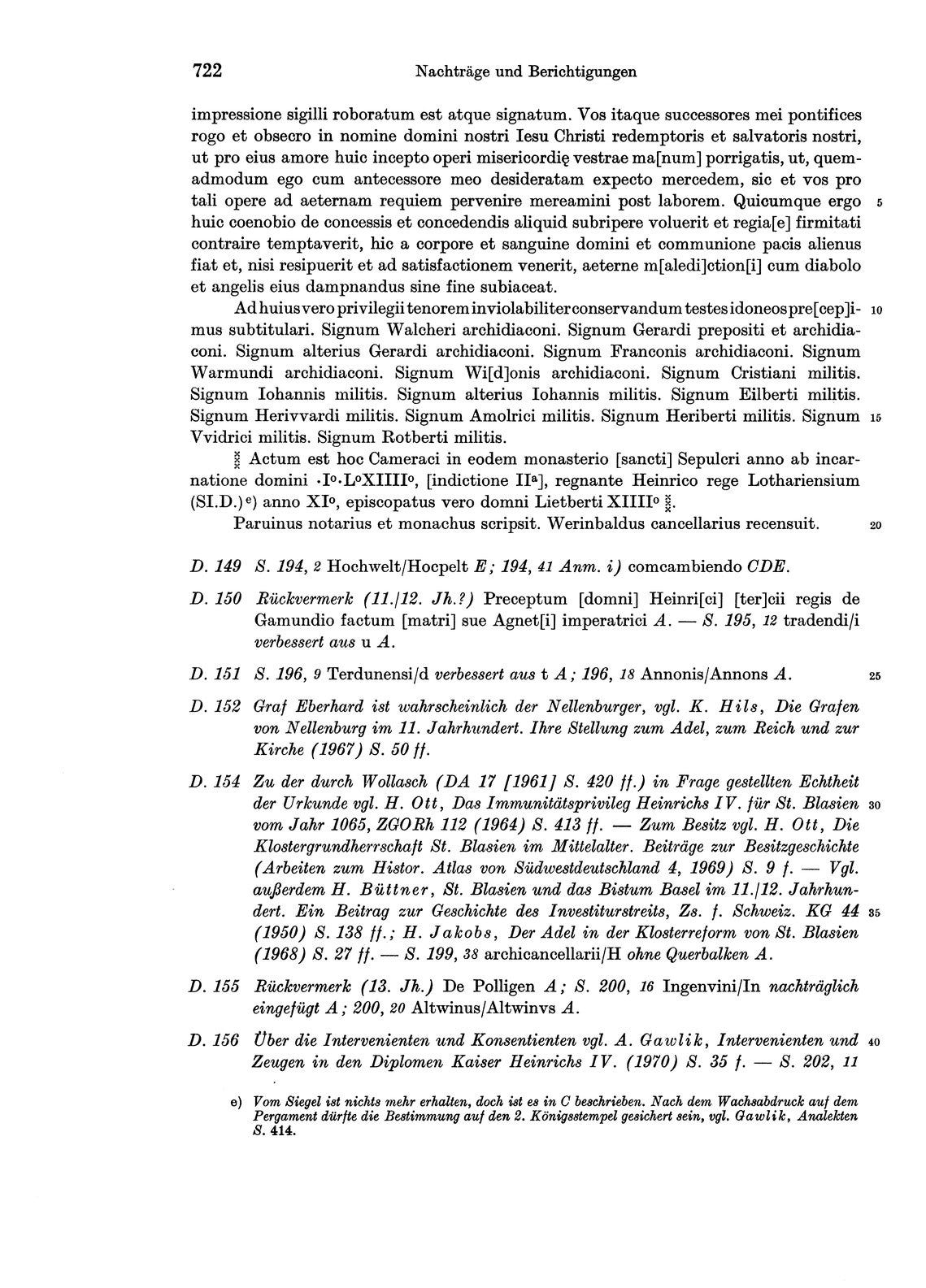
The image is a printed version of an original charter of Bishop Lietbert of Cambrai (1051-76), dated to early 1065. It mentions a ‘Herivaardi militis’ – Hereward the knight/soldier – among a list of nine ‘militis’ acting as witnesses.
This charter was written and witnessed at Cambrai before it was sent to King Henry IV at Mainz or Worms for confirmation in the spring. The document itself was a foundation charter for the monastery at Cambrai, part of a wide-ranging scheme to enlarge and refortify the city.
The need for new defences was compelled by political divisions within Cambrai, and the predatory ambitions of the neighbouring counts of Flanders. To protect himself, Bishop Lietbert hired as many mercenaries as he could find. He wasn’t particular about where they came from, and it is easy to imagine a wandering English mercenary enlisting in his service.
Granted, the Hereward on the witness list might be a different man altogether. But the date and the context fit, and no other person with the name is known from any Flemish or northern French record.